

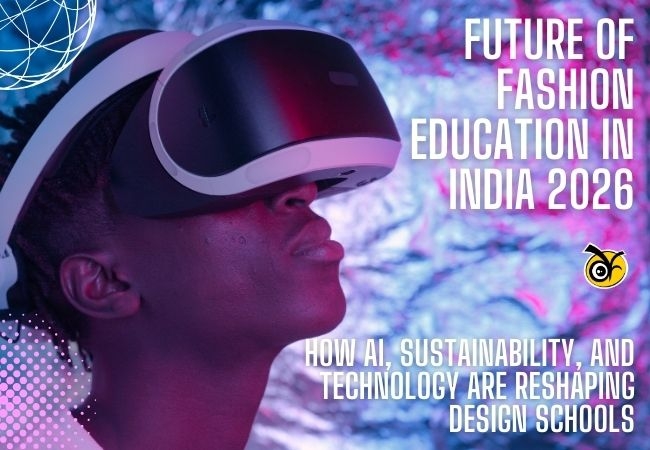
The fashion industry in India has always thrived on creativity, craftsmanship, and cultural richness. But as we move toward 2026, the landscape of fashion education in India is undergoing a monumental shift. Driven by artificial intelligence (AI), sustainability, and new technologies, design schools across the country are redefining what it means to be a fashion professional.
With India poised to become one of the fastest-growing fashion markets, the demand for next-gen designers who can integrate AI in fashion design, adopt sustainable design practices, and leverage cutting-edge technology is skyrocketing. Let’s explore how fashion design colleges in India are preparing for this future, what students can expect from the curriculum, and why the future of fashion education in India 2026 is so exciting.
The Future of Fashion Education in India 2026
Fashion education is no longer about just sketching garments or understanding textiles. By 2026, Indian fashion design schools will embrace a holistic, interdisciplinary approach. Institutions like NIFT, Pearl Academy, and emerging private universities are already adapting to global benchmarks where AI, digital design tools, and sustainability in fashion dominate.
Three major forces are driving this transformation:
-
Artificial Intelligence in Fashion Design – AI-powered software now assists designers in predicting trends, generating patterns, and personalizing collections.
-
Sustainable Fashion Curriculum in India – Eco-consciousness is becoming central, with a strong push toward circular design, upcycling, and renewable materials.
-
Fashion Technology in Education – From 3D printing to AR/VR virtual runways, students are learning to design in entirely new environments.
By combining these elements, fashion design education in India 2026 will produce professionals who are globally competitive while deeply rooted in India’s heritage of craftsmanship.
AI in Fashion Design Colleges: Redefining Creativity
AI is not here to replace creativity; instead, it enhances it. In the fashion design colleges of India, AI will become a co-creator, offering tools and insights that allow students to innovate faster and smarter.
How AI is Transforming Fashion Education
-
Trend Forecasting: AI algorithms can analyze millions of social media posts, sales data, and cultural shifts to predict fashion trends. Students will learn to decode and apply these insights.
-
Personalized Design: Virtual assistants powered by AI can suggest fabric, color, and style options tailored to consumer segments, making design more market-ready.
-
Smart Prototyping: AI software can create multiple digital prototypes of a single garment, reducing waste and improving efficiency.
Integration into Indian Fashion Schools
By 2026, AI labs and collaborations with tech companies will be standard in leading fashion schools in India. Students will not only master design software like CLO 3D and Adobe Illustrator but also learn to code basic algorithms to refine their creations. This integration ensures that graduates are tech-savvy designers who can thrive in an industry where data meets design.
Sustainable Design Curriculum in India: Building Responsible Designers
Sustainability is no longer a trend—it’s a necessity. In fact, sustainable fashion education in India is expected to become the backbone of every design curriculum by 2026.
Key Focus Areas in Sustainability
-
Circular Fashion – Students will study how to design products that can be reused, recycled, or biodegraded.
-
Material Innovation – Courses will introduce biodegradable fabrics, plant-based leathers, and smart textiles that reduce environmental harm.
-
Ethical Supply Chains – Emphasis will be placed on fair labor, artisan collaborations, and local sourcing.
-
Zero-Waste Design – Creative methods like pattern optimization and upcycling will be taught as essential design tools.
-
Sustainable Business Models – Students will learn entrepreneurship with sustainability at its core, aligning with India’s growing eco-conscious consumer base.
Positioning Indian Fashion Education Globally
Indian fashion schools are uniquely positioned because of the country’s heritage in handloom, natural dyes, and artisan craftsmanship. By merging this traditional wisdom with modern sustainable design education, India will not just follow global standards but set them.
The Role of Technology in Shaping Fashion Design Colleges
While AI and sustainability are central, other technologies are also transforming fashion education in India.
Fashion Tech Innovations in Classrooms
-
3D Printing: Allows students to create intricate garment structures and accessories that were once impossible.
-
Virtual Reality (VR) & Augmented Reality (AR): Enable immersive experiences like virtual fashion shows and digital trial rooms.
-
E-Learning Platforms: Hybrid education models are expanding access to students across India, making fashion education more inclusive.
-
Blockchain in Fashion: Students will study how blockchain can ensure transparency in supply chains and authenticate luxury fashion.
Preparing Students for the Global Market
By embedding these technologies in curricula, Indian fashion design schools will ensure their students are not just creators but also innovators. Graduates will be ready to launch fashion tech startups, work with global brands, and drive change within the industry.
Key Highlights: The Future-Ready Indian Fashion Student
By 2026, students graduating from fashion schools in India will be equipped with a unique blend of skills:
-
Creative Vision – rooted in traditional craft yet enhanced by AI tools.
-
Sustainability Literacy – designing with the environment and ethics in mind.
-
Tech Fluency – skilled in 3D design, AR/VR, and digital production.
-
Entrepreneurial Thinking – building innovative, sustainable brands.
-
Global Competence – prepared to work across diverse cultural and fashion ecosystems.
This fusion of creativity, responsibility, and technology is what will set the future of fashion education in India 2026 apart.
Conclusion: A Transformative Journey Ahead
The next decade promises an extraordinary evolution in fashion design education in India. By 2026, AI in fashion design colleges, a strong sustainable design curriculum in India, and immersive fashion technology will reshape not just the classrooms but also the future of the Indian fashion industry.
India’s fashion schools are not only preparing designers to be creative but also responsible innovators who can solve global challenges. As AI sharpens their insights, sustainability guides their values, and technology expands their possibilities, the future of fashion education in India is set to be both dynamic and world-leading.
The classroom of tomorrow will look very different, but the essence of design—creativity, storytelling, and cultural expression—will remain at its core. With this balance, Indian fashion education 2026 will not just adapt to global shifts but lead them.
Leave A Reply
Latest Posts
Top 10 Best Fashion Design Colleges in Ahmedabad
Top 10 Graphic Design Colleges in India 2026 – Updated Guide with Fees, Admission Process & Placements
Top 10 Automobile Design Colleges in India (2026): Courses, Fees, Entrance Exams & Career Scope
Top 10 Architecture Colleges in India