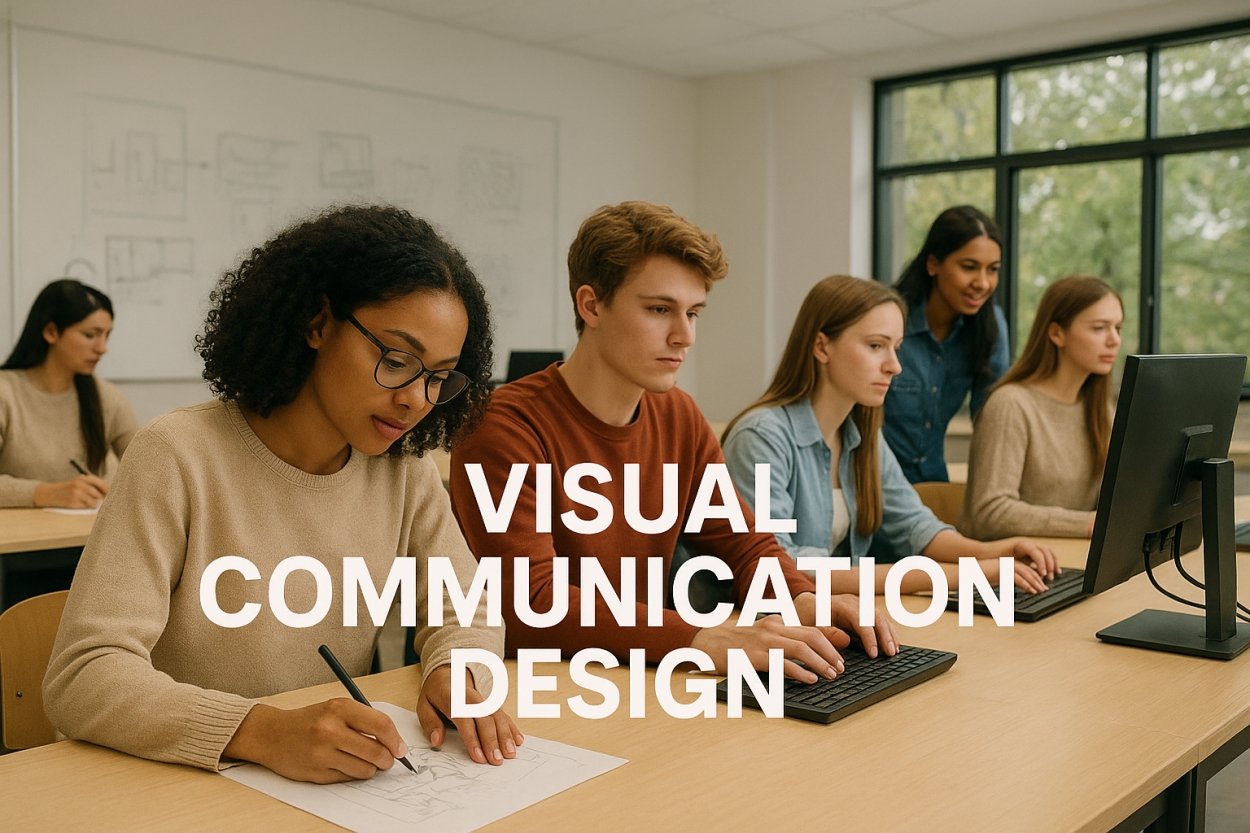
If you have a passion for creativity, visuals, and storytelling, then Visual Communication Design might be the perfect career path for you. This field beautifully blends art, technology, and communication, allowing designers to create powerful messages through visuals — whether it’s for advertising, branding, animation, film, or digital media.
But how do you get into a good Visual Communication Design college in India? Let’s break it down step by step — from eligibility and exams to portfolio preparation and interviews.
Before you start applying, you need to know if you’re eligible.
To join most undergraduate programs in Visual Communication Design, you must have completed your 10+2 (or equivalent) from a recognized board. Many colleges welcome students from any stream — Science, Commerce, or Arts — though a background in creative subjects like Fine Arts, Computer Applications, or Graphic Design can give you an extra edge.
Most reputed colleges expect at least 50% marks in Class 12. However, your creativity and portfolio often weigh more than just grades.
Generally, there isn’t a strict age limit, but some private design colleges may prefer students between 17 to 23 years for undergraduate courses.
Unlike traditional courses, admission to design programs often involves entrance exams that test creativity and design aptitude rather than just academic knowledge.
Many colleges conduct their own Design Aptitude Test (DAT) to evaluate drawing skills, imagination, and problem-solving ability.
Some universities also accept scores from exams like UCEED (Undergraduate Common Entrance Exam for Design), which is one of India’s most recognized design entrance tests. Performing well in such exams can open doors to top design schools.
A portfolio is often the most important part of your admission process. It represents who you are as a designer — your creativity, imagination, and style.
Sketches and illustrations
Digital artwork or graphic design projects
Photography or short video work
Conceptual projects that show your thinking process
Focus on quality, not quantity.
Keep it clean, organized, and easy to navigate.
Show variety — it highlights your flexibility and learning potential.
Include original ideas, not copied designs.
A strong portfolio can sometimes make up for lower exam scores — it’s your biggest chance to shine.
Once you’ve shortlisted the colleges you’re interested in, the next step is to apply.
Research colleges offering Visual Communication Design programs.
Check their eligibility criteria and important dates.
Gather your documents — mark sheets, ID proof, certificates, and portfolio.
Fill out the application form carefully (online or offline).
Pay the application fee (if required).
10th and 12th mark sheets
Passport-size photographs
ID proof (Aadhaar, PAN, etc.)
Recommendation letters (if asked)
Portfolio of creative work
Success in design entrance exams depends on your practice, observation skills, and creative thinking.
Learn the fundamentals of design — color theory, typography, visual storytelling, and composition.
Also, start getting familiar with digital tools like Photoshop, Illustrator, or Figma.
Take mock tests or sample papers from previous years.
Join art workshops or online design challenges.
Observe visuals around you — posters, ads, packaging — and analyze what makes them effective.
After your test and portfolio evaluation, most colleges conduct a personal interview or interaction.
This is your chance to express who you are as a creative person — your ideas, inspirations, and understanding of design.
Awareness of design and media trends
Ability to express creative ideas clearly
Passion for visual storytelling
Communication skills and originality
Be confident, honest, and natural. Colleges want to see your genuine passion, not rehearsed answers.
Once you clear the entrance rounds, colleges release a merit list based on your overall performance — exam, portfolio, and interview. If you’re selected, you’ll need to submit your original documents and pay the admission fees to confirm your seat.
Apply to multiple colleges — it increases your chances.
Keep updating your portfolio with your best and most recent work.
Read about current design trends, branding, and digital storytelling.
Be yourself during interviews — authenticity always stands out.
Getting admission to a Visual Communication Design college in India isn’t just about marks — it’s about creativity, curiosity, and effort. Focus on building a strong portfolio, practicing your fundamentals, and staying inspired by great design around you.
With the right preparation and a passion for visual storytelling, you can turn your creativity into a successful and fulfilling career in Visual Communication Design.
