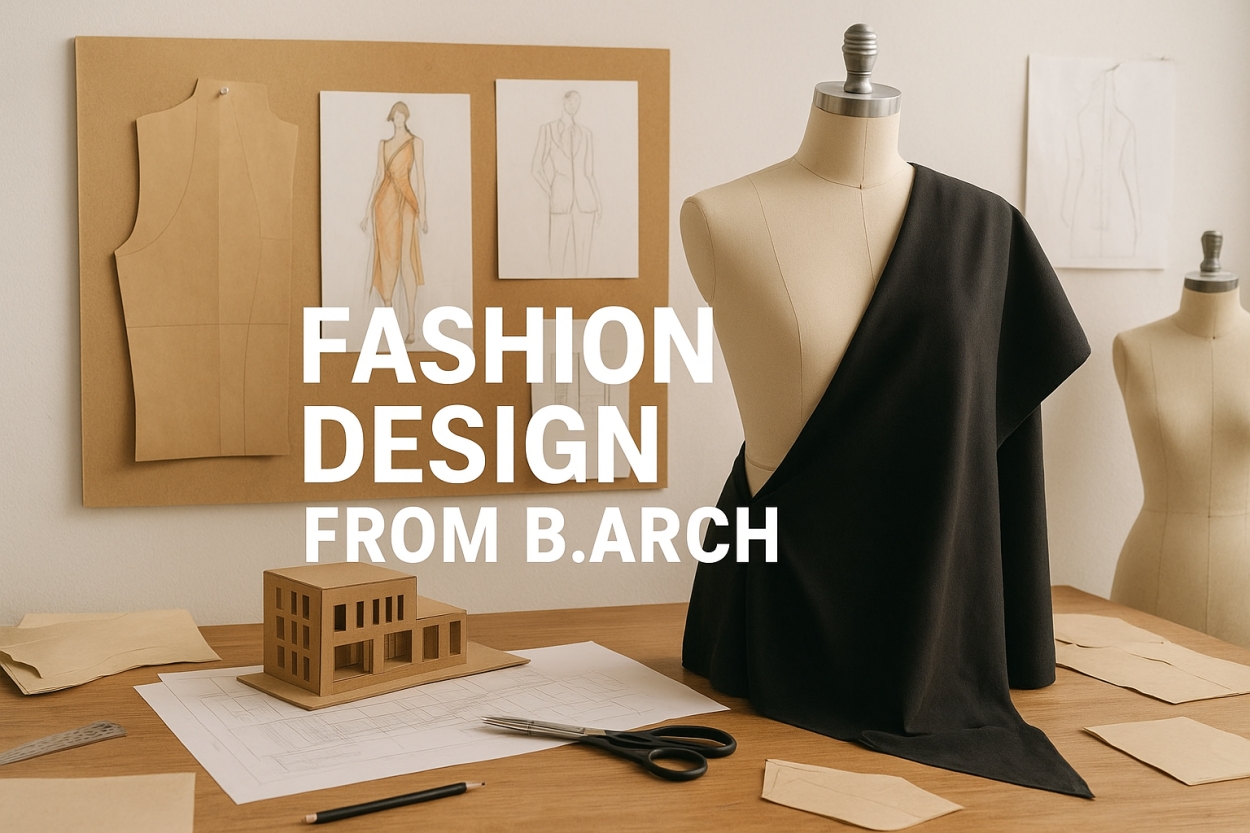
Pursue Fashion Design After B.Arch
Transitioning from a B.Arch (Bachelor of Architecture) background to a career in fashion design may seem unconventional, but it is entirely possible. Your architectural training equips you with creativity, spatial visualization, design thinking, and an eye for aesthetics—all of which are valuable in fashion. This guide will show how to leverage your B.Arch skills and move into the fashion industry successfully.
1. Understanding the Connection Between Architecture and Fashion Design
While architecture and fashion design seem different, both revolve around design, structure, and creativity. Your B.Arch background provides:
- Form, Structure, and Proportion: Essential for creating garments that fit and drape well.
- Visualization Skills: Ability to conceptualize unique designs and turn ideas into tangible pieces.
- Knowledge of Materials and Textures: Transferable to selecting fabrics and finishes.
- 3D Modeling & CAD Experience: Useful for creating digital fashion sketches and prototypes.
By recognizing these overlaps, you can confidently step into fashion design with a fresh perspective.
2. Pursuing Formal Fashion Education
Even with a B.Arch degree, formal fashion training helps you acquire specialized knowledge. Options include:
a) Short-Term Courses
Certification Programs or Diplomas focusing on:
- Garment construction and pattern making
- Fashion illustration and sketching
- Textile studies
- Fashion trends and styling
Ideal for quickly gaining practical skills and experimenting with fashion projects.
b) Bachelor’s or Master’s Programs
- Bachelor’s in Fashion Design (3–4 years): Comprehensive learning of techniques, fashion history, and industry practices.
- Master’s in Fashion/Apparel Design (2 years): Advanced techniques, research, and professional project experience.
- Some institutions may allow lateral entry or exemptions for certain design fundamentals because of your architecture background.
3. Skill Development for Fashion Design
To excel in fashion design, you need to develop new skills alongside your architectural expertise:
a) Technical Skills
- Pattern making and draping
- Sewing and tailoring
- Textile knowledge
b) Digital Skills
- Fashion illustration software (Adobe Illustrator, CorelDRAW)
- 3D design tools (CLO 3D, Marvelous Designer)
c) Creative and Conceptual Skills
- Trend analysis
- Color theory and composition
- Concept development and storytelling for collections
4. Building a Strong Portfolio
Your portfolio is the key to showcasing your transition:
- Include sketches, 3D models, and design projects.
- Highlight experimental garments or collaborations.
- Use architectural projects to demonstrate structural thinking and innovative use of materials.
- A strong portfolio stands out when applying to fashion schools or approaching employers.
5. Gaining Industry Exposure
Practical experience is essential. Seek opportunities such as:
- Fashion houses or designer studios
- Apparel manufacturing units
- Styling and merchandising agencies
Internships provide insight into industry workflows, client preferences, production processes, and help build a professional network.
6. Career Paths in Fashion Design After B.Arch
Your combined skills open doors to diverse opportunities:
- Fashion Designer: Ready-to-wear, couture, or avant-garde collections
- Textile Designer: Fabric patterns, prints, and textures
- Costume Designer: Theater, film, or performance arts
- Fashion Illustrator / CAD Designer: Digital fashion concepts
- Entrepreneur: Launch your own brand or fusion projects blending architecture and fashion
7. Leveraging Your Architecture Experience
Your architectural expertise gives you a competitive edge:
- Structural Innovation: Experiment with unique shapes, forms, and silhouettes.
- Material Experimentation: Translate architectural materials into fashion textures.
- Project Management Skills: Plan and execute fashion collections effectively.
Conclusion
Transitioning from B.Arch to fashion design is not only possible—it can make you a unique designer with a distinctive perspective. By combining architectural knowledge with fashion-specific skills, building a strong portfolio, and gaining industry exposure, you can carve a successful career in fashion. The key is to leverage your creativity, structural thinking, and design principles in a fresh and exciting context.