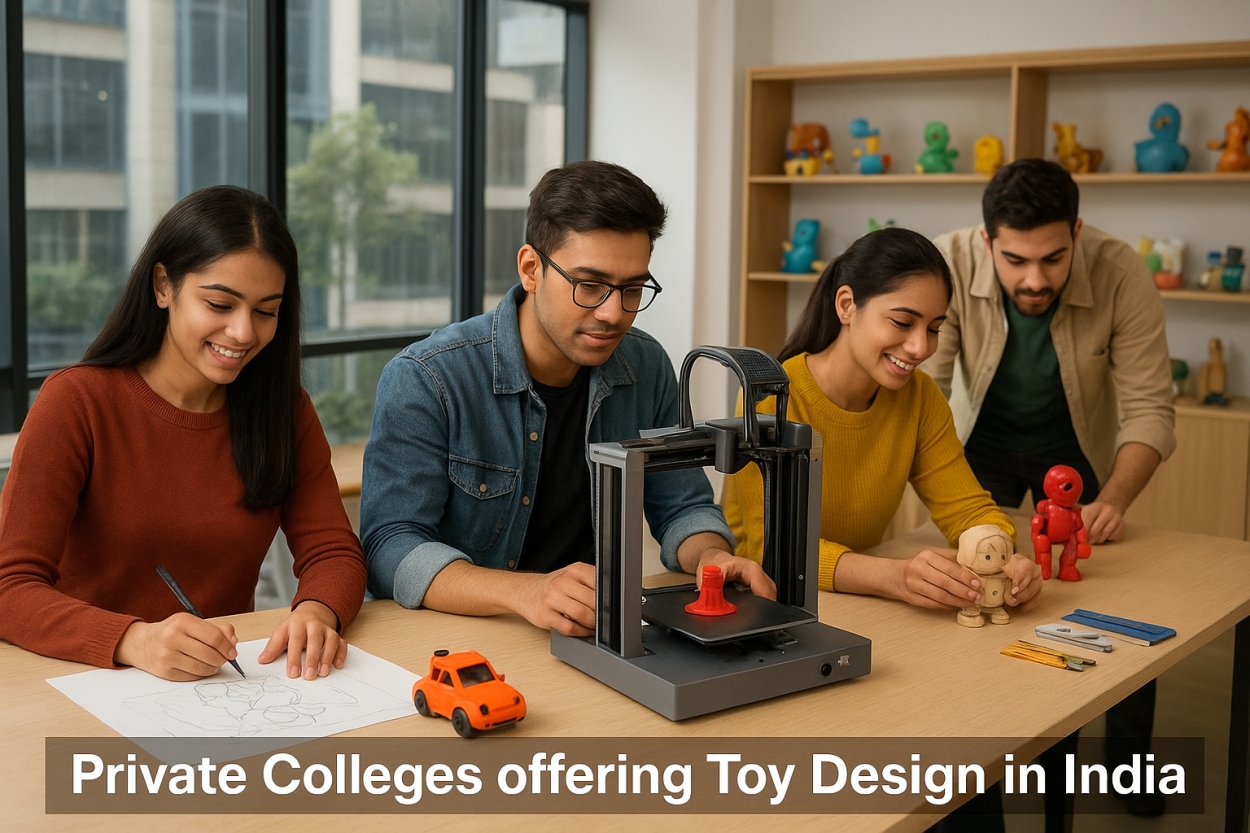
Designing toys combines creativity, product innovation, child psychology, and hands-on craftsmanship. While only a few institutes offer dedicated Toy Design programs, several top private design colleges in India provide Product Design or Game Design courses that allow specialization in toys, games, and play-oriented products. Below is a complete overview of the top 10 colleges, including location, fees, placements, and achievements, all in human content format.
Location: Bangalore
Approx Fees: ₹6–8 lakhs (for full program)
Placement Highlights: Average CTC ranges between ₹6–8 LPA, highest up to ₹15 LPA in creative design and innovation sectors.
Why It’s Best:
Srishti Manipal is known for its innovative curriculum and interdisciplinary projects. Students get the opportunity to work on toy and game design, child learning, and sustainable play material. The institute encourages real-world problem solving and collaborations with companies like Hasbro and LEGO. Its graduates have gone on to launch startups in educational toys and creative learning products.
Location: Multi-city campuses
Approx Fees: ₹7–10 lakhs (for bachelor’s program)
Placement Highlights: Average salary around ₹6–7 LPA; highest package reported up to ₹12 LPA in design-related roles.
Why It’s Best:
Pearl Academy’s Product and Industrial Design programs allow students to explore toy design, ergonomics, and creative aesthetics. The academy offers strong industry connections, internships, and live projects with reputed toy and lifestyle brands. Students regularly participate in national design competitions and have won awards for innovative toy prototypes.
Location: New Delhi
Approx Fees: ₹6–8 lakhs
Placement Highlights: Highest CTC ₹12 LPA; average CTC around ₹7–8 LPA.
Why It’s Best:
IIAD follows a British curriculum in collaboration with Kingston University, UK. Its Product Design course nurtures skills in innovation, play-based design, and child-centric product creation. The college’s design exhibitions showcase creative toy concepts, and several graduates have joined reputed design studios and global brands.
Location: Pune
Approx Fees: ₹9–11 lakhs
Placement Highlights: Average ₹7 LPA; highest ₹16 LPA (design and product firms).
Why It’s Best:
MITID is a pioneer in Product Design and Industrial Design education. Students learn about toy ergonomics, sustainable materials, and user interaction. The institute has advanced modeling labs and prototyping studios, allowing learners to bring toy ideas to life. Alumni are placed in leading design houses and startups.
Location: Pune
Approx Fees: ₹8–10 lakhs
Placement Highlights: Average ₹6–7 LPA; highest ₹14 LPA.
Why It’s Best:
SID emphasizes functional and playful product development. Its design students often create educational and sensory toys. Strong industry collaborations, annual design shows, and internship programs make it one of the best private colleges for toy-related product design.
Location: Sonepat
Approx Fees: ₹6–7 lakhs
Placement Highlights: Average ₹5–6 LPA; highest ₹11 LPA.
Why It’s Best:
WUD offers a specialized Product Design program with courses in Toy and Game Design. It promotes creative thinking and innovation, providing students with hands-on experience in 3D modeling and fabrication. Students have represented India in international toy exhibitions and startup competitions.
Location: Pune
Approx Fees: ₹7–8 lakhs
Placement Highlights: Average ₹5 LPA; highest ₹10 LPA.
Why It’s Best:
Founded in collaboration with DYP Group, DYPDC emphasizes practical design learning. Students engage in creative toy concept design, child-safety materials, and playful interfaces. The institute’s strong ties with design studios help students enter the toy and product innovation industry.
Location: Dehradun
Approx Fees: ₹8–9 lakhs
Placement Highlights: Highest ₹13 LPA; average ₹6 LPA.
Why It’s Best:
UPES offers B.Des and M.Des programs with elective modules in Toy Design and Play Systems. Students are trained in design thinking, play psychology, and fabrication techniques. The university’s innovation lab supports toy startups and entrepreneurial ventures.
Location: Phagwara, Punjab
Approx Fees: ₹6–8 lakhs
Placement Highlights: Average ₹5 LPA; highest ₹10 LPA.
Why It’s Best:
LPU’s Product and Industrial Design programs encourage creative toy-based projects. Students use advanced tools for rapid prototyping and design research. The university also provides exposure through design festivals and international collaborations.
Location: Ahmedabad
Approx Fees: ₹8–10 lakhs
Placement Highlights: Average ₹6–7 LPA; highest ₹12 LPA.
Why It’s Best:
UID offers a specialized Product Design program focusing on child-centered design, materials, and functionality. The college has produced several award-winning projects in toy and educational product design. Its annual design showcase draws recruiters from creative industries.
India’s toy design education is evolving rapidly with the government’s “Make in India – Toy Industry Push.” Most private design colleges are now integrating toy and game modules within product design curricula. These colleges stand out for their modern labs, design studios, industry collaborations, and global exposure.
Choosing the right institute depends on your budget, creative focus, and placement goals, but all these colleges provide a strong platform for aspiring toy designers to turn their imagination into innovation.